- connectethiopiatours@gmail.com
- +251 911041678

Lalibela
A land of deep faith, vibrant festivals, ancient mysteries, and enduring legends—Lalibela captures both the heart and the mind. Perched on vast valleys and rugged escarpments, it remains the spiritual soul of Ethiopia, alive and awe-inspiring.
Comprising eleven churches and two chapels, Ethiopia’s labyrinthine ‘New Jerusalem’, excavated by King Lalibela in the 12th century and still in active use today, has been dubbed the “Eighth Wonder of the World”. Hand-carved into the rock flake by painstaking flake, a process that would have required around 40,000 man-years to complete, Lalibela represents the apex of an Ethiopian church-excavating tradition that dates to the arrival of Christianity circa 350 AD.
What Makes Lalibela Special

Lalibela is one of Ethiopia’s most enchanting destinations—often the crown jewel of any journey through the country.
From mountaintop views where the land stretches endlessly until jagged peaks break the horizon, to the serene stillness of rural paths disrupted by the vibrant energy of weekly markets—Lalibela is a place of contrasts and wonder.
Here, pilgrims in flowing white robes gather in soulful unison, their prayers and songs echoing through every corner of the town.
A local priest, noticing your quiet presence, might gently offer you a gown—welcoming you into the moment as the service begins.
Previous
Next
What can I find around Lalibela?
With the iconic rock-hewn churches taking the spotlight, many visitors rush through Lalibela in just a day or two—leaving behind a treasure trove of experiences hidden in the surrounding highlands. But if you’ve got time to spare, stepping beyond the town’s center is more than worth it.
Beyond the Churches: What Awaits in the Highlands
Lalibela’s surrounding hills are home to unforgettable adventures. Some can be done in a few hours, others call for a couple of nights in the mountains—but all offer a deeper connection to Ethiopia’s raw beauty and spiritual soul.
Monasteries and Hidden Sanctuaries
Just a short drive from the town, you’ll find historic gems like Yemrehane Kristos, Asheton Maryam, and Nakuta La’ab—centuries-old monasteries carved into remote cliffs and caves, still alive with tradition and reverence.
Abuna Yoseph: For the True Adventurer
Standing at 4,260 meters, Abuna Yoseph is Ethiopia’s sixth highest peak and a serious challenge for trekkers. But those who make the climb are rewarded with sweeping views over the Northern Highlands and Goha Mountains—an experience few get to witness.
Hudad Lodge & Local Hikes
For something more accessible, head to Hudad Lodge, a community-run retreat set on the edge of a vast escarpment. A short drive and a 2–3 hour hike take you to jaw-dropping views and serene solitude—a perfect spot to unwind before leaving Lalibela.
Community Trekking
Some of Ethiopia’s most soul-stirring travel moments come from its community trekking routes, launched near Lalibela in 2004. These trails, winding through villages and dramatic landscapes, offer a quiet, powerful way to experience life in the highlands—while supporting the people who live there.
Don’t just pass through Lalibela—immerse yourself in it. There’s a whole world beyond the churches waiting to be explored.
The Rock-hewn Churches of Lalibela
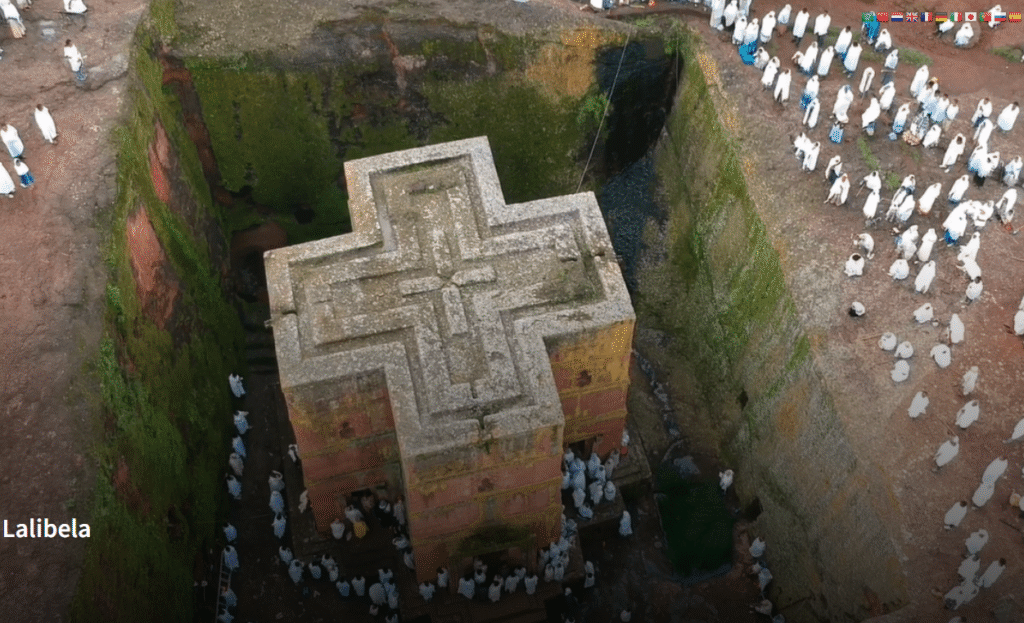
In the 12th century, King Lalibela set out to recreate Jerusalem—not with towering spires, but by carving holy sanctuaries directly into the volcanic rock beneath his feet. Rather than reaching toward the heavens, these remarkable stone churches seem to invite the divine to dwell among the people. Today, 11 monolithic rock-hewn churches remain, forming one of Ethiopia’s most awe-inspiring spiritual and architectural wonders.
Spread across a 15-hectare area and divided by a rock-carved stream known as the Jordan River, the churches are arranged in two main clusters. The iconic Bet Giyorgis (Church of Saint George) stands apart, about 300 meters from the others, and remains the most visually striking symbol of Lalibela’s sacred legacy.
Hiking and Community Trekking
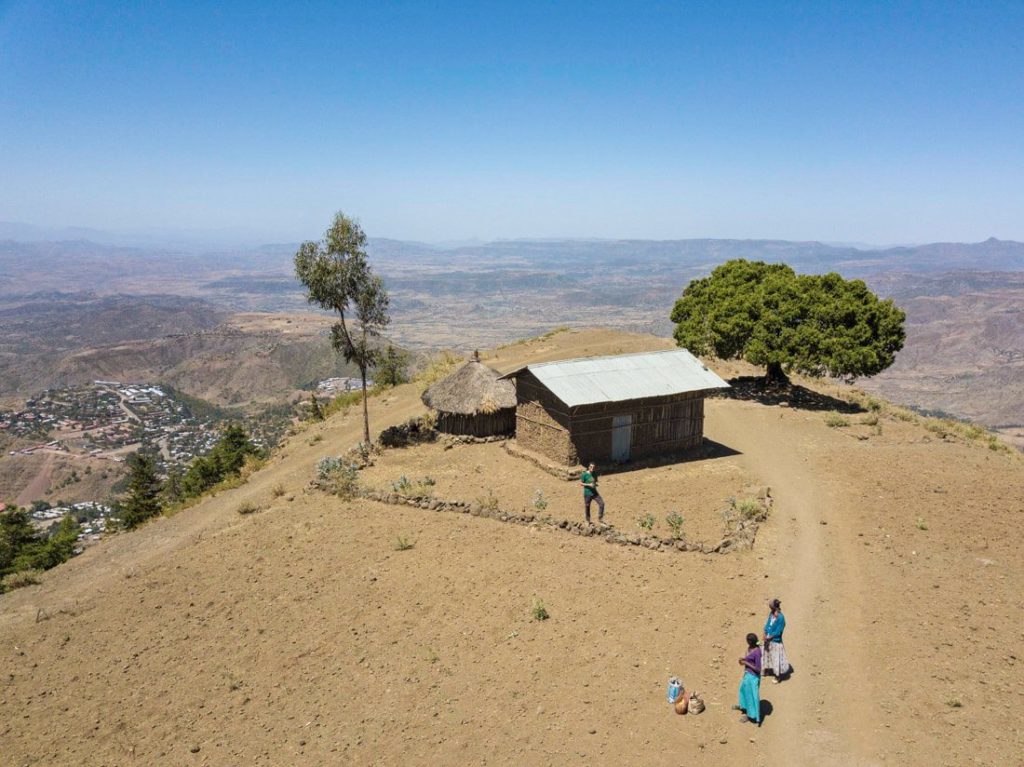
Lalibela’s surrounding escarpments offer some of Ethiopia’s most scenic and rewarding hikes. Trails wind through dramatic highlands, leading to locally run eco-lodges and community guesthouses with stunning views and heartfelt hospitality.
A short afternoon hike takes you to Hudad Lodge—an ideal overnight escape perched above the valley. For a deeper experience, community trekking routes extend across the countryside, with stone-and-thatch guesthouses along the way.
These treks provide an authentic connection to local life while directly benefiting the communities involved. Every step you take helps support sustainable tourism and preserve the unique culture of the Ethiopian highlands.
Simple, soulful, and unforgettable—trekking in Lalibela is one of the best ways to connect with Ethiopia’s land and people.
Our Popular Trips to Lalibela
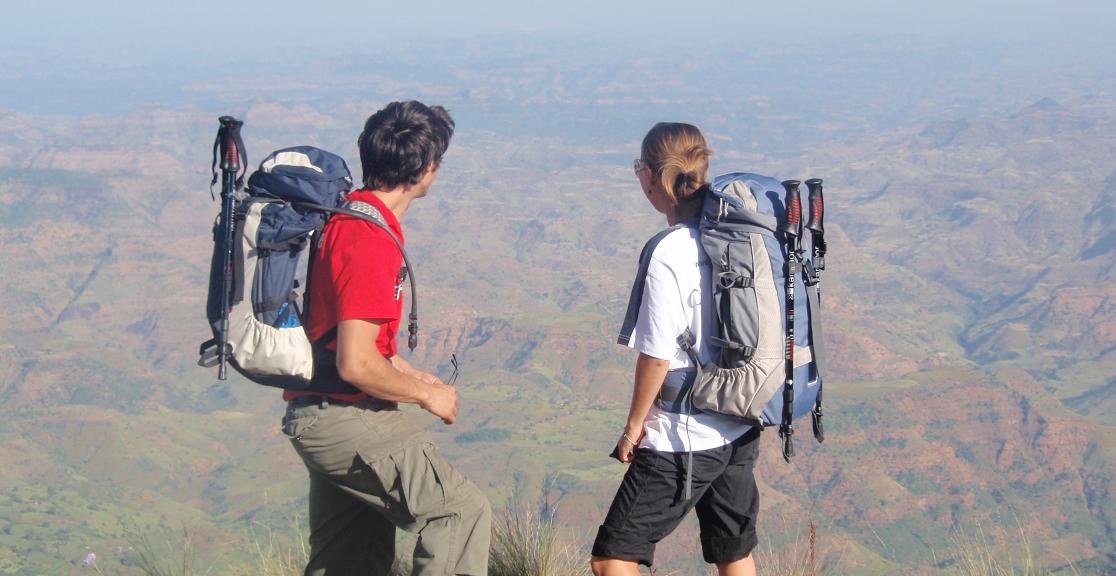
Northern Highlights
This classic route is perfect if you’re looking for an introduction to Ethiopia...
6 Days
$1,029
DISCOVER MORE
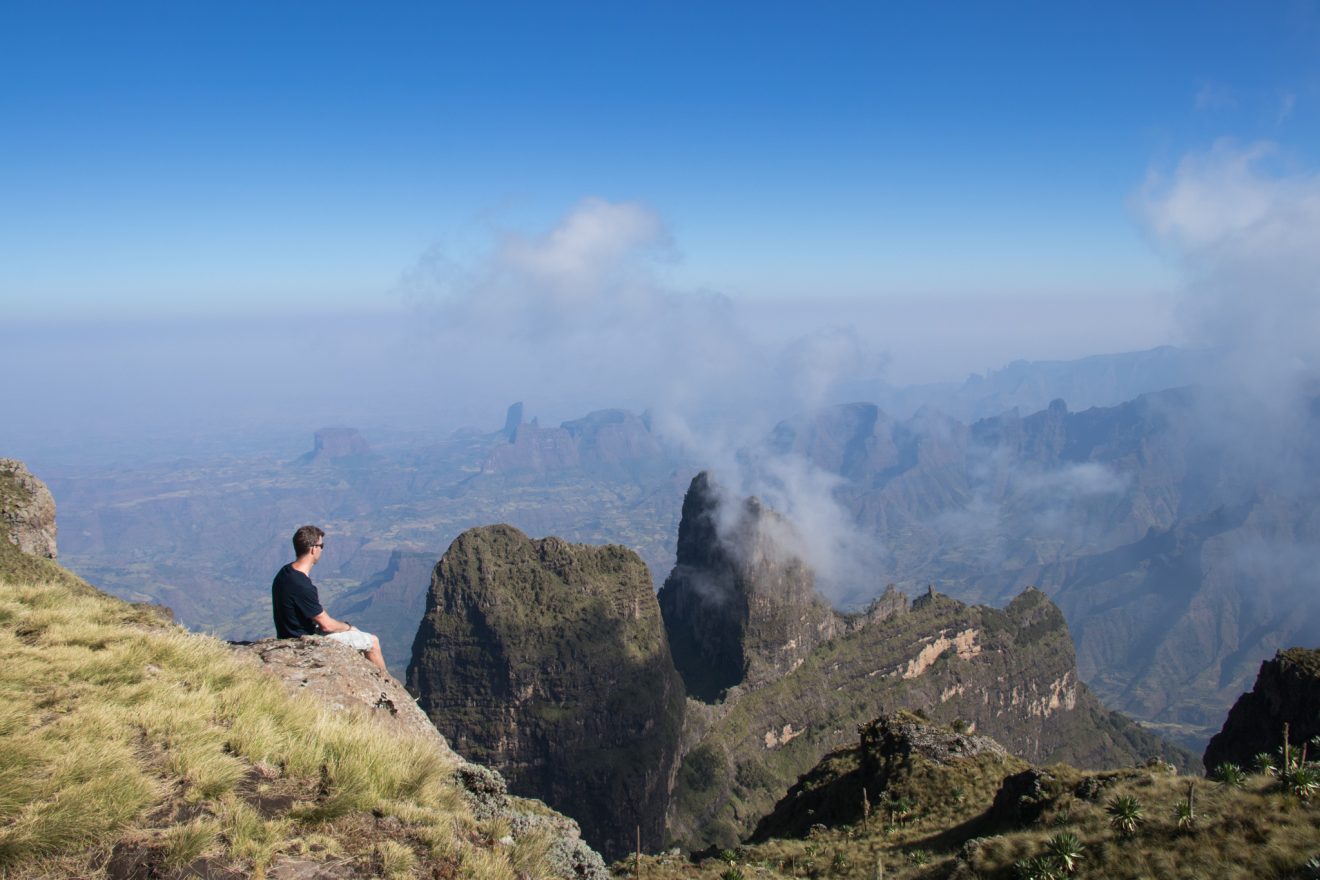
Peaks and Plateaus of Ethiopia
Community trekking in Wollo and Tigray and hiking through the Simien Mountains...
12 Days
$2,785
DISCOVER MORE

Historic North and Luxury Lodges
Explore Ethiopia’s northern circuit in style. Visit ancient monuments, discover...
12 Days
$3,625
DISCOVER MORE
Peaks and Plateaus of Ethiopia
Community trekking in Wollo and Tigray and hiking through the Simien Mountains...
12 Days
$2,785
DISCOVER MORE
Lalibela Travel FAQs
The quality of food in Ethiopian hotels has improved significantly in recent years, and most of Lalibela’s top hotels now offer well-prepared meals with both international and traditional Ethiopian options on the menu.
That said, stepping out to explore the town’s local dining scene is well worth it—and Lalibela doesn’t disappoint.
Popular spots like XO Restaurant and Torpedo Tej House are great for enjoying authentic local flavors in a casual setting. But the crown jewel of Lalibela’s restaurant scene remains Ben Abeba—a one-of-a-kind dining experience that blends Ethiopian ingredients with a Scottish twist, making it one of the most iconic restaurants in all of Ethiopia.
Lalibela has remained well-preserved in part due to its historic isolation—but getting there today is far easier than it used to be. While the town is still not linked by sealed roads to the rest of Ethiopia’s major destinations, Ethiopia’s reliable domestic flight network makes access straightforward year-round.
Daily flights connect Lalibela’s airport to cities across Ethiopia, including Addis Ababa, Axum, Gondar, and Bahir Dar. The airport lies 25 km from the town center, connected by a well-maintained tar road with shuttle or taxi services available.
For those traveling by road, Lalibela can be reached from Axum or Mekele in a long day’s drive, or from Bahir Dar or Gondar in around five to six hours. However, a road trip from Addis Ababa is not recommended, as the journey can take up to two days.
If you’re coming from southern regions like the Omo Valley or Bale Mountains, you’ll need to connect via domestic flights through Addis Ababa.
Getting to Lalibela is no longer the challenge it once was—making it easier than ever to explore this extraordinary destination.
Lalibela is at its liveliest during the major religious festivals in December, January, and September. The most important of these is Ethiopian Christmas (Genna) on January 7th, when thousands of pilgrims gather and the town transforms into a powerful display of faith and celebration—making it one of the most unforgettable times to visit.
The peak travel season runs from October to March, offering the best weather for hiking and sightseeing. These months bring clear skies, sunshine, and ideal conditions for exploring both the churches and the surrounding highlands.
While June to early October marks the rainy season, travel is still possible—and can be surprisingly rewarding. Fewer tourists mean quieter churches, more personal encounters, and a deeper, more reflective atmosphere—perfect for those seeking solitude and authenticity.
Most travelers spend 1 to 2 nights in Lalibela—enough time to explore the famous rock-hewn churches at the heart of the town.
If you plan to visit the surrounding highland monasteries or go on a short trek, it’s best to stay at least 2 nights to make the most of your time.
During major religious festivals like Ethiopian Christmas (Genna) on January 7th or Timket on January 19th, we recommend staying 3 nights to fully experience the ceremonies, processions, and vibrant local atmosphere.
The gateway to the Omo Valley is the southern town of Arba Minch. Most tours begin with a short domestic flight from Addis Ababa to Arba Minch, where travelers typically spend a night at Paradise Lodge before heading into the Omo region the next morning.
From Arba Minch, all travel into the Omo Valley is done by road in a Toyota Land Cruiser 4×4, the most reliable vehicle for the region’s rugged terrain. Drive times between destinations usually range from 2 to 4 hours, depending on your itinerary. The routes are scenic and culturally rich, but expect a mix of paved and bumpy dirt roads.
You can also reach the Omo Valley with a full-day drive from Addis Ababa, traveling south across the Great Rift Valley. This option allows for stopovers at beautiful lakeside resorts and eco-lodges along the way. Many travelers choose a combined route—flying in and driving out via the Rift Valley—to experience more of southern Ethiopia’s natural and cultural highlights.
For those with extra time, it’s worth considering a detour to the stunning Bale Mountains or extending your itinerary to visit other lesser-known regions of Ethiopia.
Need help planning your route or booking your flight? Contact us here and we’ll help you build the perfect Omo Valley itinerary.
The famous rock-hewn churches of Lalibela were carved during the late 12th and early 13th centuries, during the reign of King Lalibela of the Zagwe Dynasty. Most historians place their construction between 1181 and 1221 AD. These extraordinary monolithic structures were part of the king’s ambitious plan to create a “New Jerusalem” in response to the Muslim conquest of the original Jerusalem.
Even older are some of the highland monasteries surrounding the town, such as Yemrehane Kristos, which is believed to date back to the 11th or early 12th century, predating the rock churches by several decades. Built inside a cave and constructed from wood and stone in the Axumite style, it remains one of Ethiopia’s most important early Christian sites.
Together, these sacred sites represent nearly 900 years of continuous spiritual tradition, making Lalibela not just a historical destination, but a living monument of Ethiopian Orthodox Christianity.
Lalibela sits high in Ethiopia’s northern highlands at an altitude of around 2,500 metres, which gives it a cool mountain climate year-round.
The rainy season runs from June to September, when you can expect occasional showers and lush green landscapes. The peak travel season is from October to March, offering the driest and sunniest weather, ideal for exploring the rock-hewn churches and hiking in the highlands.
During the dry months, daytime temperatures usually range between 20°C and 25°C, though they can climb up to 30°C on especially clear days. Due to the elevation, however, the air is crisp and evenings can get cold—so it’s wise to pack a warm jacket, no matter when you visit.
Overall, Lalibela offers pleasant weather for most of the year, with cooler nights and plenty of sun in the dry season.
Not mandatory, but absolutely worth it. Guides provide historical context, help navigate the tunnels and hidden passages, and ensure you don’t miss key details. Just make sure they’re officially registered.
Yes, Lalibela is considered one of the safest destinations in Ethiopia. The town is peaceful, and locals are welcoming. Like anywhere, just take basic precautions with valuables and cash.
Dress modestly—shoulders and knees covered out of respect. Remove your shoes before entering any church. Lightweight clothes with a scarf or shawl work well during the day, and bring a warm layer for the evening chill.
Yes, but bear in mind that the terrain is uneven, with many steps and rock paths. If mobility is a concern, plan accordingly and take your time. The atmosphere and history are rewarding for all ages.
Ready to Plan Your Ethiopian Adventure?
Connect
Speak with our local experts and get quick answers to plan your trip confidently.
Match
We match your preferences with curated itineraries that fit your style and budget.
Book
Finalize your adventure with easy booking, secure payment, and local support.