- connectethiopiatours@gmail.com
- +251 911041678

Rock-hewn Churches of Lalibela
In the 12th century, King Lalibela set out to build a “New Jerusalem” in Ethiopia. He carved it straight from the volcanic rock below him — not just one church, but a complex of 13 rock-hewn churches, each one a masterpiece still standing today, waiting to be explored.
Lalibela Rock‑Hewn Churches

The rock-hewn churches of Lalibela occupy a 15-hectare, roughly triangular site carved around a seasonal stream known locally as the Jordan River. These remarkable medieval structures are grouped into two main clusters, with the iconic Bet Giyorgis (Church of Saint George) standing alone about 300 meters from the others—arguably the most photogenic and well-preserved of them all.
The northern cluster features seven interconnected churches and chapels. Their layout suggests a unified architectural vision, likely executed under the direct order of King Lalibela himself. This cluster includes masterpieces such as Bet Medhane Alem and Bet Maryam, showcasing elaborate carvings, columns, and symbolic religious designs. These are mostly subterranean monoliths—carved free from the surrounding rock on three or more sides—demonstrating exceptional engineering and spiritual ambition.
In contrast, the southern cluster, located about 250 meters away, contains seven more churches, but with less symmetry and a more organic, irregular layout. Narrow passageways, tunnels, and time-worn steps give it a more ancient, mysterious atmosphere. Here, churches were often cut directly into existing rock faces and caves, a simpler technique hinting at older origins.
Together, the rock-hewn churches of Lalibela form one of the most awe-inspiring religious sites in Africa—a UNESCO World Heritage Site and a testament to Ethiopia’s rich Christian heritage and architectural genius.
Previous
Next
Northern Cluster of Lalibela Rock-Hewn Churches
Bet Medhane Alem
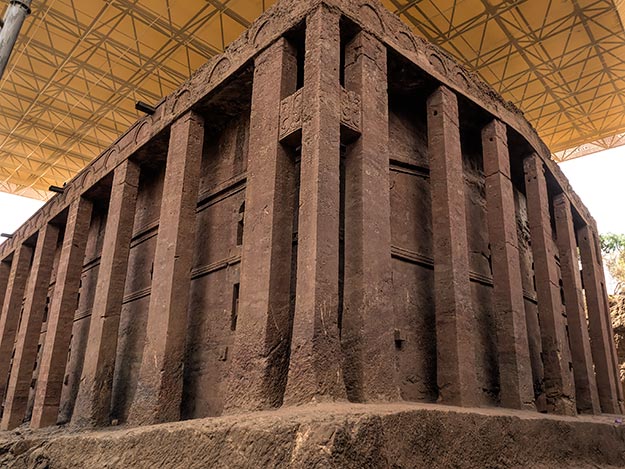
Bet Medhane Alem is the first church you’ll encounter after passing the ticket office, and it immediately sets the tone for Lalibela’s architectural marvels. Widely regarded as the largest free-standing rock-hewn church in the world, this massive structure embodies both grandeur and simplicity.
The church’s design echoes the form of a Greek temple, with its clean lines and symmetry. Rows of internal and external stone pillars surround the rectangular structure, giving it a monumental feel. It sits within a spacious sunken courtyard, the surrounding rock walls etched with monastic cells and carved graves, offering a glimpse into the ascetic lives once lived here.
Bet Medhane Alem isn’t just an architectural feat—it’s a spiritual anchor of the northern cluster of Lalibela’s churches, and a powerful introduction to the sacred legacy carved deep into Ethiopia’s volcanic rock.
Bet Golgotha and Mikael (House of Golgotha Mikael)
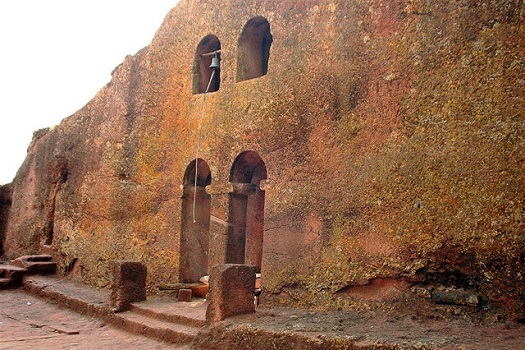
Biete Golgotha – Sacred Sanctuary of Lalibela
Located in Lalibela’s northwestern cluster, Biete Golgotha is one of the most sacred and artistically rich churches. It is also one of the few churches in the world where women are not allowed to enter.
Accessible through Bet Mikael (also called Bet Debre Sina), the church features seven life-sized saint reliefs and is believed to house the tomb of King Lalibela himself.
Bet Mikael and Bet Golgotha are linked to the Bet Maryam courtyard by a rock-hewn trench. Bet Mikael impresses with cruciform pillars and an abundance of carved crosses, while Bet Golgotha contains some of Ethiopia’s oldest Christian artworks—including carvings of the 12 apostles. Four are visible to visitors, while the remaining eight are hidden behind curtains inside the sacred Selassie Chapel.
The Selassie Chapel is one of the holiest spaces in Lalibela, reserved for the faithful, and is believed to be the final resting place of King Lalibela himself. This makes Biete Golgotha not just an architectural marvel, but a deeply spiritual destination.
Bet Maryam (House of Mary), Bet Meskel (House of the Cross) and Bet Denagel (House of Virgins)
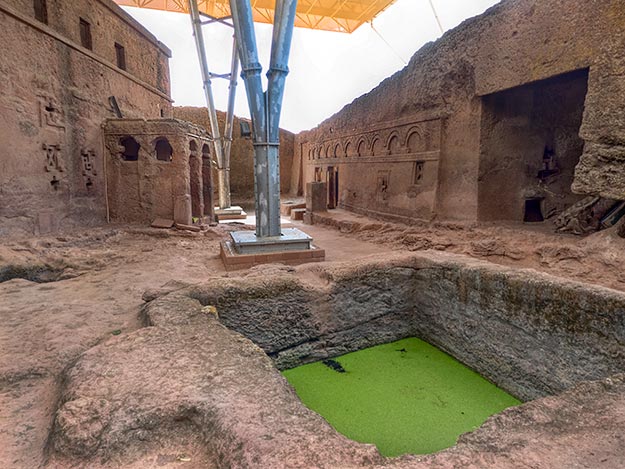
Bet Maryam – The First Church of Lalibela and Home of the Hidden Pillar
Bet Maryam is one of the most revered churches in Lalibela, believed to be the first one carved. This 10-metre high rock-hewn structure is accessed through a short, low tunnel from Bet Medhane Alem. Inside, it houses one of Lalibela’s greatest mysteries: a sacred pillar said to be inscribed in two languages, telling the story of the city’s construction and the Twelve Commandments.
According to legend, the pillar glowed with divine light until the 16th century, after which it was veiled and hidden from public view—never to be seen again. Today, Bet Maryam remains a powerful pilgrimage site, rich with spiritual and historical significance.
Sharing the same courtyard, carved into the surrounding rock, are two smaller chapels: Bet Meskel and the tiny Bet Dengel. Bet Dengel is believed to have been built in memory of 50 Christian nuns martyred by the Roman emperor Julian the Apostate in the 4th century—a solemn tribute to unwavering faith.
Biete Giyorgis (House of Saint George)
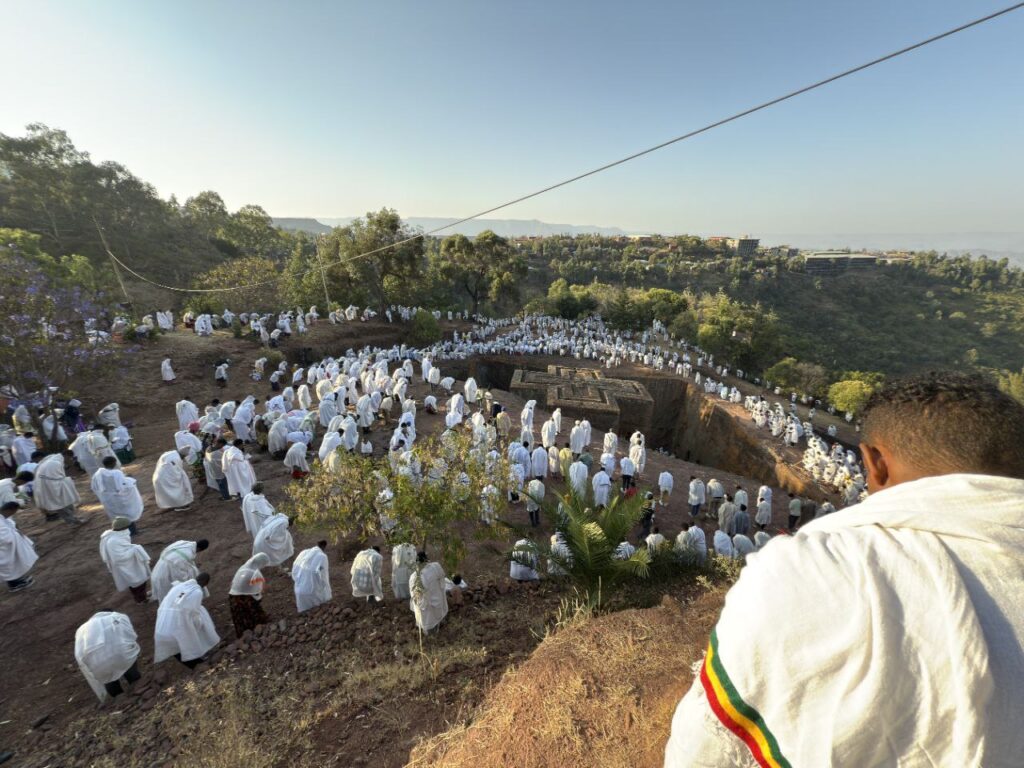
Bete Giyorgis – The Church That Made Peace With a Saint
Legend has it that King Lalibela, while carving his series of sacred churches, forgot to dedicate one to Saint George. The saint, displeased, is said to have appeared in a vision to confront the king. In response, Lalibela commissioned the now-iconic Bete Giyorgis — a masterpiece carved directly into solid rock. Guides still point out what are believed to be hoof prints left by Saint George’s horse near the church entrance.
Bete Giyorgis stands 15 metres tall, sculpted in the shape of a cross. From ground level, only the roof is visible — the rest lies hidden in a sunken courtyard enclosed by sheer rock walls. Its exterior is sharply defined and visually striking, while the interior is intentionally modest, echoing a quiet spiritual depth.
For the most profound experience, visit at dawn. The soft light and peaceful atmosphere elevate the already sacred setting, making Bete Giyorgis one of the most unforgettable sites in Lalibela.
Among the most recognized Lalibela rock-hewn churches, Bet Giyorgis stands out as a masterpiece of faith and engineering.
While the rock-hewn churches of Lalibela have stood for over 800 years, centuries of exposure to weather and water have left their mark. To preserve these sacred structures, translucent plastic shelters have been installed over several of them.
They may not be beautiful—but they’re necessary. Think of them as temporary guardians, not distractions. What truly matters is what lies beneath: the extraordinary architecture, the deep spiritual legacy, and the living history carved into stone.
Southern Cluster of Lalibela Rock-Hewn Churches
The southern Lalibela rock-hewn churches reflect simpler, more ancient designs carved directly into cliffs—offering a unique spiritual ambiance.
Bet Emanuel (House of Emmanuel)

Bet Emanuel – Lalibela’s Tribute to Ancient Axum
Standing 12 metres high and carved with striking precision, Bet Emanuel is the only full monolith in Lalibela’s southern cluster. Believed to be the private church of the royal family, it reflects strong Axumite architectural influence. It’s easy to imagine the courtyard once filled with imperial pageantry and loyal attendants during festivals.
Today, the atmosphere is more reflective. Hermit cells are carved into the soft rock around the church, and old skeletal remains can still be seen in abandoned niches—silent witnesses to centuries of devotion.
Inside, a beautiful staircase leads up to an upper gallery, though it is currently closed to the public. In the southwest corner of the church, a sealed passage once descended underground to connect with Biete Merkorios, hinting at the hidden complexity and sacred intention behind Lalibela’s rock-hewn design.
Bet Gabriel Raphael (House of Gabriel Raphael)
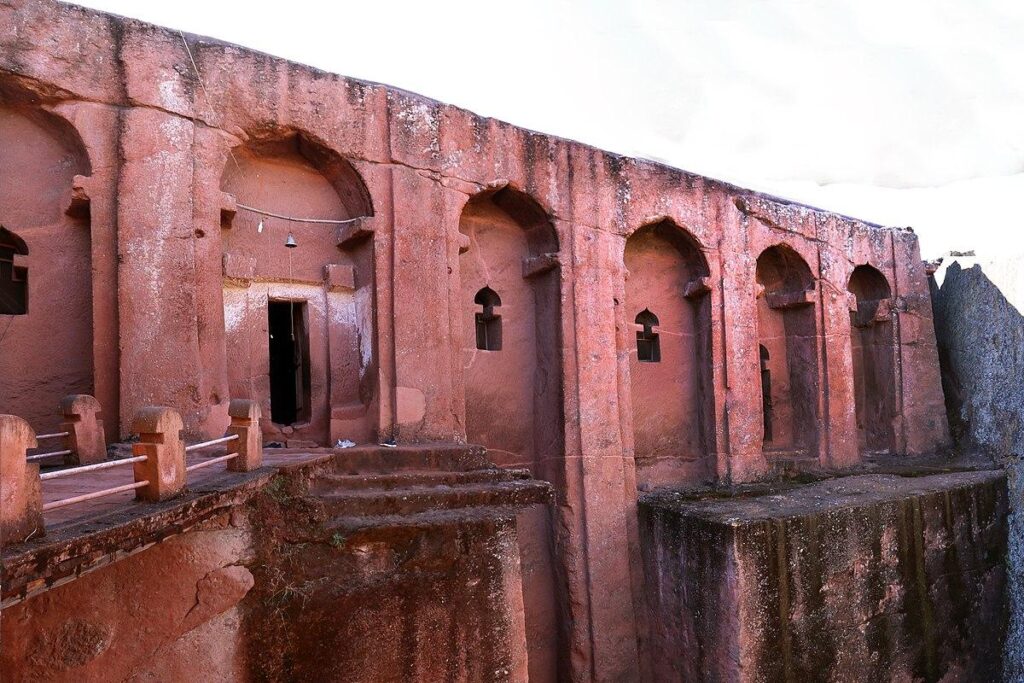
Bet Gabriel – Fortress, Palace, and Mystery
The concept of a church doubling as a fortress is rare, but Bet Gabriel-Rufael embodies both. With its towering walls and fortified layout, many believe this structure may have originally served as a royal palace—later transformed into a church during King Lalibela’s era, as the Axumite Empire declined in the 7th and 8th centuries.
The approach to Bet Gabriel is striking: a deep, rock-hewn trench—often filled with water during the rainy season—surrounds the site, enhancing its fortress-like feel. In contrast, the interior is modest, shadowed, and rich in spiritual atmosphere.
Beneath the church, legend speaks of hidden rooms and an underground passage. But even the priests say the path to these secret chambers has long been lost—leaving the mystery of Bet Gabriel buried deep in stone and time.
Bet Mercurios (House of Saint Mercurios)
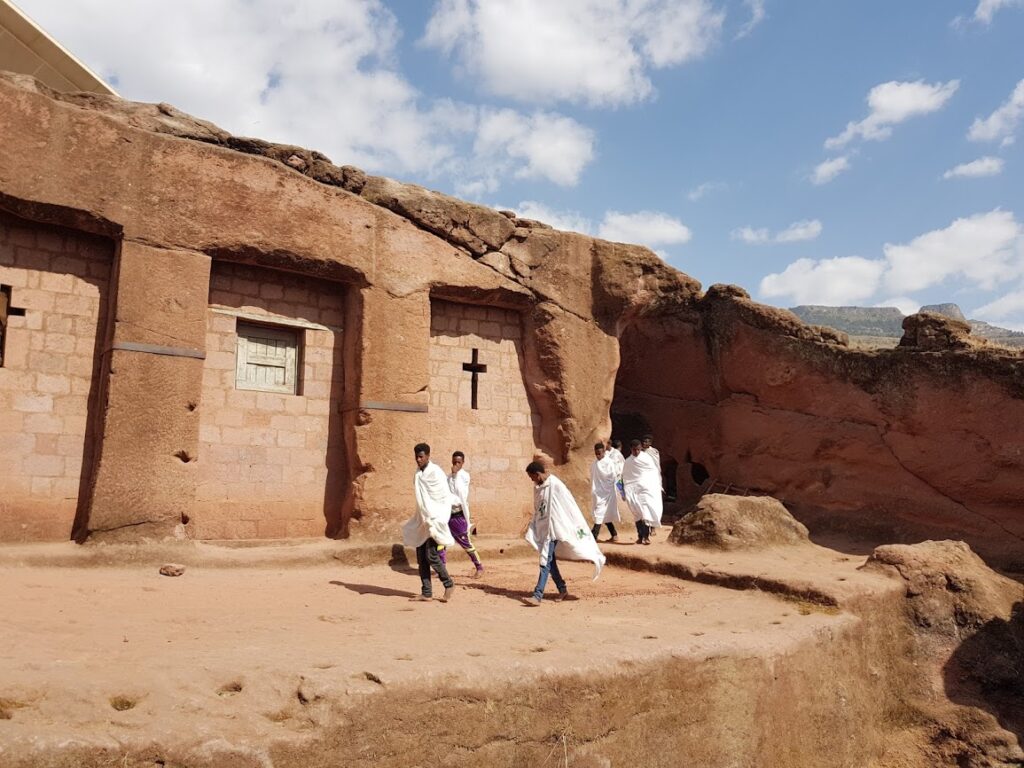
Bet Gabriel – Fortress, Palace, and Mystery The concept of a church doubling as a fortress is rare, but Bet Gabriel-Rufael embodies both. With its towering walls and fortified layout, many believe this structure may have originally served as a royal palace—later transformed into a church during King Lalibela’s era, as the Axumite Empire declined in the 7th and 8th centuries.
The approach to Bet Gabriel is striking: a deep, rock-hewn trench—often filled with water during the rainy season—surrounds the site, enhancing its fortress-like feel. In contrast, the interior is modest, shadowed, and rich in spiritual atmosphere.
Beneath the church, legend speaks of hidden rooms and an underground passage. But even the priests say the path to these secret chambers has long been lost—leaving the mystery of Bet Gabriel buried deep in stone and time.
Explore more beyond the Lalibela rock-hewn churches:
→ Discover Gheralta Mountain churches in Tigray → Learn more on UNESCO’s official site → Dive into Axum Obelisks & ancient Ethiopian kingdomsReady to Plan Your Ethiopian Adventure?
Connect
Speak with our local experts and get quick answers to plan your trip confidently.
Match
We match your preferences with curated itineraries that fit your style and budget.
Book
Finalize your adventure with easy booking, secure payment, and local support.
+251 911041678
Frequently Asked Questions: Rock-Hewn Churches of Lalibela
There are 11 major rock-hewn churches in Lalibela, divided into three main groups: the northern cluster, the southern cluster, and the isolated Bete Giyorgis. Each is carved directly from solid volcanic rock.
The churches were commissioned by King Lalibela in the late 12th and early 13th centuries. According to legend, he was divinely inspired to build a “New Jerusalem” in Ethiopia after Muslim conquests made pilgrimage to the Holy Land difficult.
Yes. These churches are not museums—they’re living, active places of worship used daily by Ethiopian Orthodox Christians for prayers, services, and festivals.
While not mandatory, hiring a local guide is highly recommended. They can explain the history, symbolism, hidden features, and stories that you won’t get just by walking through.
Wear modest clothing. Shoulders and knees should be covered, and shoes must be removed before entering any church. It’s also respectful to wear socks.
Most, yes—but Biete Golgotha is an exception. Women are not permitted to enter this particular church due to long-standing religious tradition.
The best time to visit is during the dry season, from October to March, when conditions are ideal for exploring. The Genna festival (Ethiopian Christmas) in January is especially spectacular.
To visit all the major churches and take in the atmosphere, plan to stay at least three full days. More time allows for sunrise visits, treks to nearby monasteries, and less rushed exploration.
Photography is usually allowed outside and in some interiors, but not all areas permit photos, especially sacred spaces. Always ask your guide or the local priest before taking pictures.
No. The translucent plastic roofs currently covering some churches are temporary protective structures installed by UNESCO to shield them from further erosion. They may not be pretty, but they’re essential until a better solution is found.